Maximize Your HVAC Maintenance Team’s Output With Remote HVAC Diagnostic Tools
In recent decades, many sectors have shifted towards remote, a trend that the COVID-19 pandemic has accelerated. The HVAC industry is no exception, and businesses are now starting to recognize the immense potential and benefits associated with adopting remote HVAC services.
Remote tools not only improve tenants' satisfaction but also reduce expenses and enhance the productivity of busy VRF/VRV experts by enabling HVAC service companies to manage their resources more effectively. In the following article, we will explore various types of remote HVAC diagnostic tools, their benefits to HVAC service providers, the challenges that can hinder their effectiveness, and strategies for overcoming them.
When it comes to using HVAC diagnostic tools, technicians are traditionally required to arrive on-site. This is typically done as part of scheduled yearly or bi-yearly inspections, as well as ad-hoc visits when HVAC service has been disrupted due to malfunctions.
When errors do occur, technicians are often dispatched to the relevant site to prevent damage to HVAC components and minimize downtime. Upon arrival, their diagnostic tools allow them to connect to the system and help identify the underlying issues. However, addressing malfunctions often requires a second visit after securing the relevant parts. Ensuring the problem has been resolved may even result in a third on-site visit.
As for scheduled inspections, they often turn out to be unnecessary. Even when issues are detected, they are often identified after significant damage that could have been prevented has already been caused.
And so, while diagnostic tools are essential for any HVAC service professional, certain problems are associated with their traditional use case as part of scheduled visits. This is where remote HVAC diagnostic tools come into the picture.
After being installed and connected, remote HVAC diagnostic tools enable technical service teams to intelligently assess, service, and control any HVAC system at any time, from anywhere. While system health could only be assessed on-site in the past, remote tools now offer continuous online monitoring, enabling early detection of HVAC system issues before they escalate. They also help create predictive maintenance service regimens that incorporate proactive maintenance to prevent system downtime.
By leveraging real-time alerts and in-depth system diagnostics functions, along with access to technical parameters, these remote tools help detect changes in performance trends, notify users when deviations from the normal range occur, and facilitate timely technician interventions. When minor issues are concerned, technicians may even be able to resolve them remotely.
Furthermore, by collecting data over time, remote HVAC diagnostic tools enable users to explore any given moment in the historical data and compare HVAC system performance across different periods, allowing for the identification of error recurrence and root causes.
However, these are not the only solutions currently available. One notable option is CoolAutomation's remote HVAC diagnostic tools, which consist of an intuitive cloud-based application and IoT-enabling edge devices that easily plug into any HVAC system, automatically identifying it and its linked units. Unlike HVAC manufacturer solutions, CoolAutomation's remote diagnostic tools are universal, supporting all major HVAC brands and system setups—from split to multi-split and VRF/VRV.
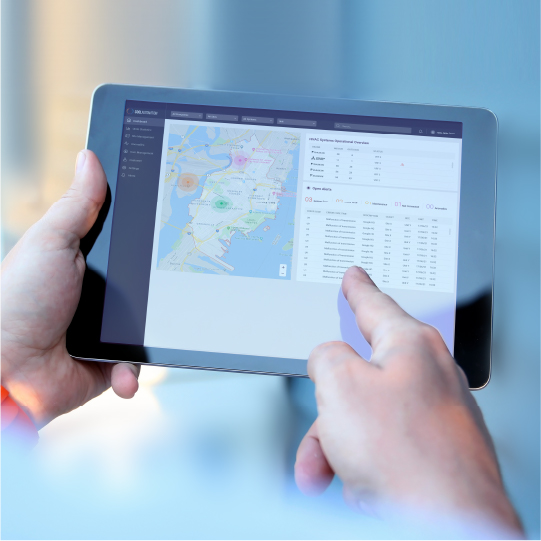
Once connected to the cloud, all brand-specific parameters of the integrated systems will be immediately and continuously collected, analyzed, and presented in the remote HVAC diagnostic application. A single interface then allows the technical team to monitor all HVAC VRF systems and access all the necessary data from the comfort of their office.
Contact us for more information about our solution portfolio and take a step toward maximizing your team's output.
Remote HVAC diagnostic solutions, such as those offered by CoolAutomation, enable technicians to access and analyze HVAC system data from the comfort of their office, eliminating the need for preliminary on-site visits. This allows service providers to diagnose issues before dispatching a truck, ensuring the right person is sent with the right parts. Remote post-repair validation often saves even more on-site visits. This dramatically reduces unnecessary travel, optimizes manpower utilization, and enables maintenance teams to accomplish more in less time.
Traditional maintenance often relies on scheduled visits or urgent calls after a disruptive malfunction occurs. This results in multiple unnecessary site visits on the one hand, and delayed fault detection that leads to costly repairs on the other. In contrast, a remote diagnostics solution continuously monitors systems and triggers real-time alerts when anomalies occur. This enables timely, precise intervention. The result is a reduction in unnecessary site visits, as well as less HVAC system downtime and improved longevity.
Absolutely. By facilitating the early detection of malfunctions, remote diagnostic tools help address problems before they escalate and result in severe damage to components. They can also help identify maintenance inefficiencies that cause HVAC systems to work harder and lead to excessive wear. The result is increased longevity for your HVAC systems.
It depends on the chosen solution, but yes! Unlike manufacturer-specific tools, CoolAutomation’s HVAC Predictive Maintenance Suite is brand-agnostic. Using one of our plug-and-play integration devices, it can connect to and support multiple HVAC brands and system configurations: providing a unified platform for HVAC monitoring and diagnostics.